JOURNAL / TUTORIALS
UKLISS Curling Irons — Effortless Curls, Endless Styles
Automatic versus manual curling, the temperature range your hair actually needs, and the four rules that make curls hold.
 110–210°C
ADJUSTABLE RANGE
110–210°C
ADJUSTABLE RANGE
Curls are the styling result people most often give up on — not because the tools do not work, but because the technique is unforgiving. Hold too long and you get a ringlet; release too early and it drops before lunch. Automatic curlers exist to take that judgement out of your hands.
Automatic versus manual
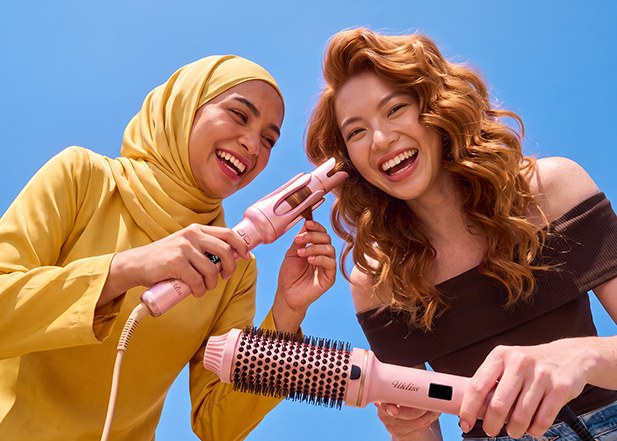
A traditional wand asks you to wrap, judge the timing and release cleanly, on both sides of your head, without a mirror behind you. An automatic curler draws the section in, rotates it, holds it for a set time and signals when to release. The curls come out the same size every time, which is the thing that is genuinely hard to do by hand.
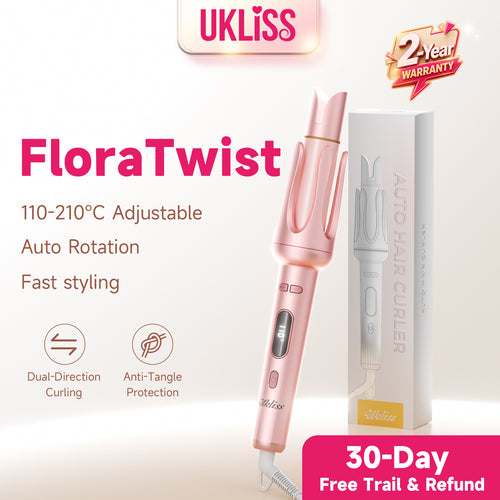
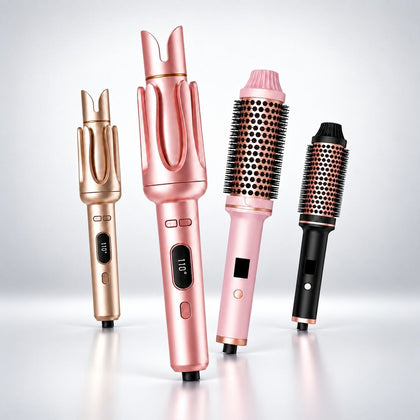
The Automatic Hair Curler rotates in both directions, so you can alternate the curl direction section by section — the small trick that makes a head of curls read as natural rather than uniform. Its adjustable 110–210°C range covers everything from fine colour-treated hair at the low end to coarse hair that refuses to hold at the top. The anti-tangle design is the part that matters in practice: it is what stops a section from winding in further than it should.
If you want curls and a dry-off in one tool
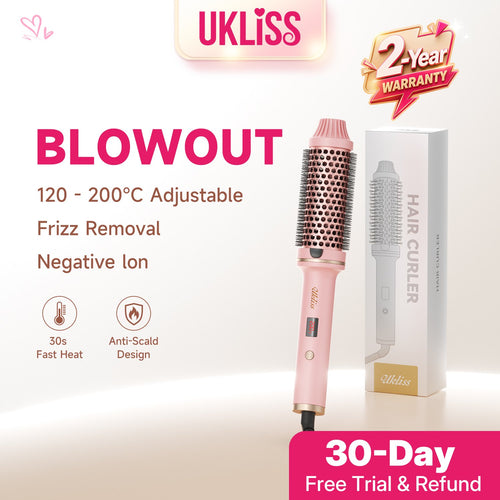
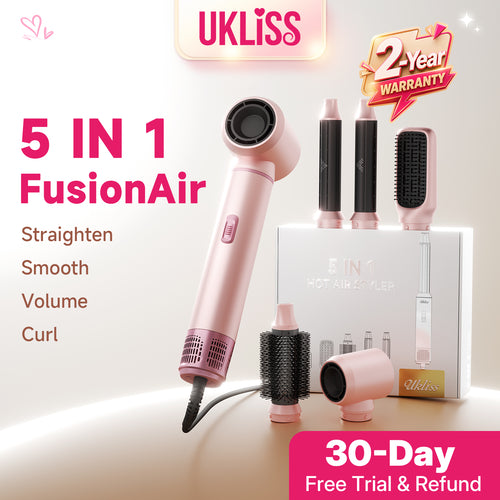
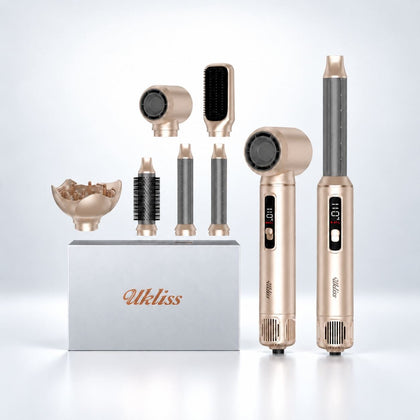
The 3 in 1 AirTwist takes a different route — auto-rotation curling, drying and blowout styling in one body. For anyone who starts from damp hair and does not want to pick up two tools, it collapses the whole routine into one. It is also the easier tool to learn on, because airflow styling is more forgiving of a mistimed release than a hot barrel.
A routine that actually holds
- Start bone dry. Curls set on dry hair. Any dampness and the shape relaxes as the water leaves.
- Work in sections about 2–3cm wide. Thicker sections cannot heat through, so the curl is only on the surface and drops quickly.
- Alternate direction. One section toward your face, the next away. This is the single biggest difference between "styled" and "done at a salon".
- Drop each curl into your palm and pin it. Let it cool as a coil rather than stretching out under its own weight. Unpin everything at the end.
- Break the curls with fingers, not a brush. A brush turns defined curls into frizz. Fingers turn them into waves.
Choosing your temperature honestly
Fine or bleached hair: stay at the lower end and accept that you will need to work in smaller sections. Medium hair: the middle of the range holds all day. Coarse or very straight hair: the upper range, and hold for the full cycle. If a curl falls out within the hour, the problem is more often that you brushed it while warm than that the heat was too low.
Making it last to the evening
Curls loosen from weight and from touching. A light hairspray on the curl before you unpin it, and keeping your hands out of your hair for the first hour, does more than any product applied afterwards. For a second day, loosely pin the curls up at night rather than sleeping on them flat.
Whichever tool you choose, the pattern is the same: dry hair, small sections, alternate directions, cool before you touch. Get those four right and almost any curler will do its job.
SAVE THIS ROUTINE
Prep. Shape. Finish.
 01
01
PREP
Blot and detangle. Start when hair is 70–90% dry.
 02
02
SHAPE
Use the lowest effective setting and work in sections.
 03
03
FINISH
Stop once the section is dry and holds its shape.