JOURNAL / TUTORIALS
UKLISS Straightening Flat Irons — Effortless Style, Every Day
Plate width, heat and passes: how to pick a flat iron for your hair type and get a smooth finish without cooking your ends.
 40 mm
WIDE PLATE DESIGN
40 mm
WIDE PLATE DESIGN
A flat iron is the most direct way to change how your hair behaves. One pass, and a section that wanted to kink or frizz lies flat and reflects light. The difference between a good result and a damaged one is not the tool alone — it is plate width, heat, and how many times you go over the same section.
Start with plate width, not temperature
Most people reach for higher heat when what they actually need is a wider plate. A narrow plate grips small sections well, which is what you want near the roots, around the face and on short hair. A wider plate covers more hair per pass, so you finish faster and, crucially, pass over each section fewer times.
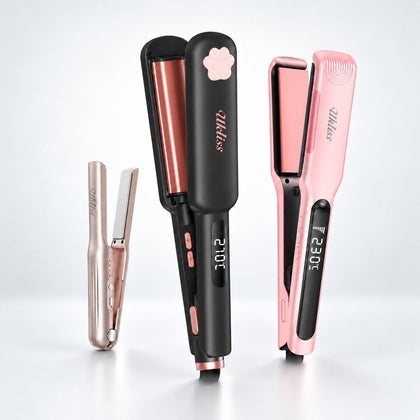
- Fine or shoulder-length hair, fringe and touch-ups: a compact plate. The MINI Cordless Hair Straightener is 25cm long and 250g, cordless, and heats fast enough to fix a fringe before you leave the house.
- Thick, long or coarse hair: go wide. The Wide Anti-Scald Hair Straightener uses a 40mm plate, so you take bigger sections and finish in fewer passes. Infrared heating spreads the heat evenly across the plate instead of concentrating it in hot spots.
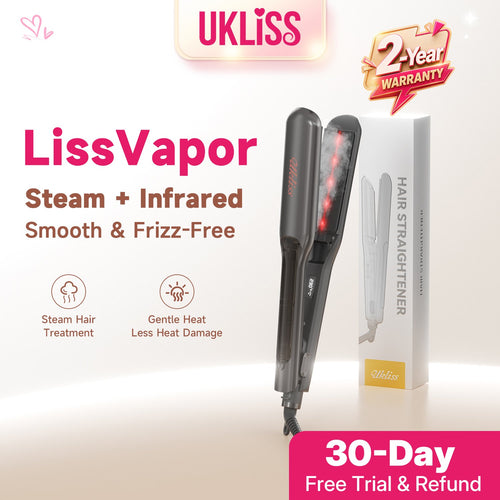
- Hair that goes dry and frizzy by the afternoon: add moisture instead of heat. The Steam Hair Straightener from our Steam Hair Care Series releases steam as it straightens, which is what keeps the finish smooth and shiny rather than flat and brittle.
The five-minute routine
- Dry completely. Straightening damp hair forces water to boil inside the strand. If the iron hisses, the hair was not dry.
- Section properly. Clip the top half up and work from the nape forward. Sections should be no thicker than the plate can close on comfortably — roughly 2–3cm.
- One slow pass beats three fast ones. Move steadily from root to tip over about three seconds. Repeated quick passes are where damage accumulates.
- Turn your wrist at the ends. A quarter turn downward on the last few centimetres stops the poker-straight look and gives a soft, salon-style finish.
- Let it cool before you touch it. Hair sets as it cools. Brushing or tying it up while warm undoes the pass you just made.
How hot is hot enough
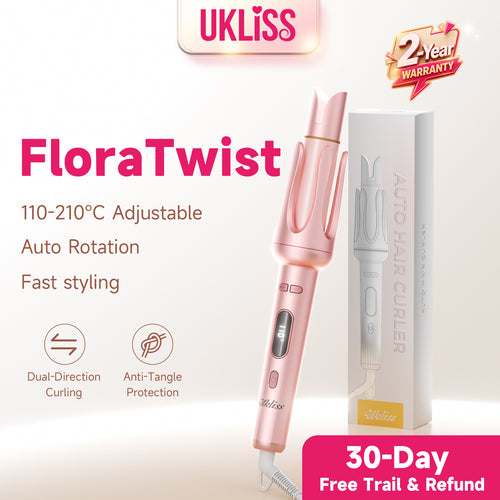
Fine or colour-treated hair rarely needs the top of the range; medium hair sits comfortably in the middle; coarse or very curly hair is the only type that genuinely benefits from the highest setting. The honest test is simple — if one pass is not holding, raise the heat one step. If one pass holds, you are already hot enough, and going hotter buys you nothing but damage.
Looking after the tool
Product build-up on the plates is the quiet reason irons start to pull. Once the iron is unplugged and completely cool, wipe the plates with a soft damp cloth. Store it without wrapping the cord tightly around the barrel — that is what breaks cables at the base. And never straighten over heavy serum or oil; a light heat protectant is the only thing that should sit between the plate and your hair.
Which one belongs in your bag
If you style at home every morning, a full-size iron earns its place on the shelf. If your hair mostly behaves and you just need to fix what the day undoes, a cordless mini in your bag is the more useful tool. Plenty of people end up with both, and use the small one far more often than they expected.
SAVE THIS ROUTINE
Prep. Shape. Finish.
 01
01
PREP
Blot and detangle. Start when hair is 70–90% dry.
 02
02
SHAPE
Use the lowest effective setting and work in sections.
 03
03
FINISH
Stop once the section is dry and holds its shape.